
How to Design an About Page People Actually Want to Read
14 MIN READ
Your About page isn’t just where you tell your story—it’s where visitors decide whether they trust you. Learn how to design an About page that feels personal, professional, and memorable.
When people click your About page, they’re usually looking for one thing: a reason to trust you. Yes, they want to learn who you are, but more importantly, they want to understand why you’re the right person to help them.
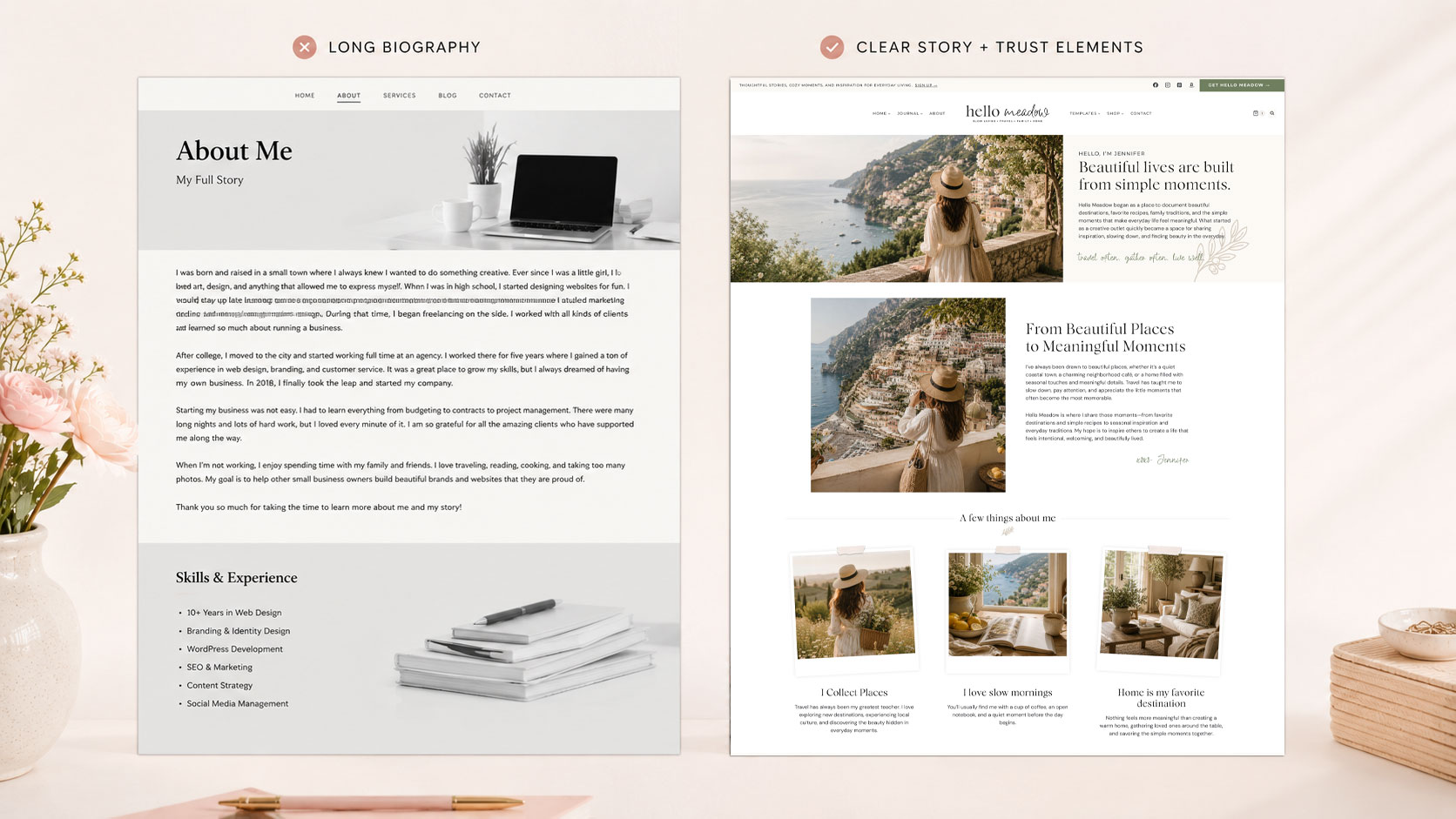
Unfortunately, many About pages either read like a résumé or become a long autobiography, leaving visitors searching for the information that actually matters. A great About page tells a story, but it’s also carefully designed to build connection, answer questions, and guide readers naturally toward taking the next step.
In this article, you’ll learn how to design an About page that feels welcoming, authentic, and memorable without overwhelming your visitors.
In This Article
01 What Visitors Are Really Looking For
02 Start With a Connection, Not a Timeline
03 Let Your Personality Show
04 Design Your Story for Easy Reading
05 Build Trust Throughout the Page
06 Write Like You’re Talking to One Person
07 Guide Visitors to the Next Step
08 Bringing it all together
01. What Visitors Are Really Looking For
Most visitors don’t arrive on your About page hoping to read your entire life story.
They’re asking questions like:
When you understand those questions, your About page becomes much easier to design.
Instead of writing everything about yourself, you begin selecting the details that help visitors feel confident choosing you.
02. Start With a Connection, Not a Timeline
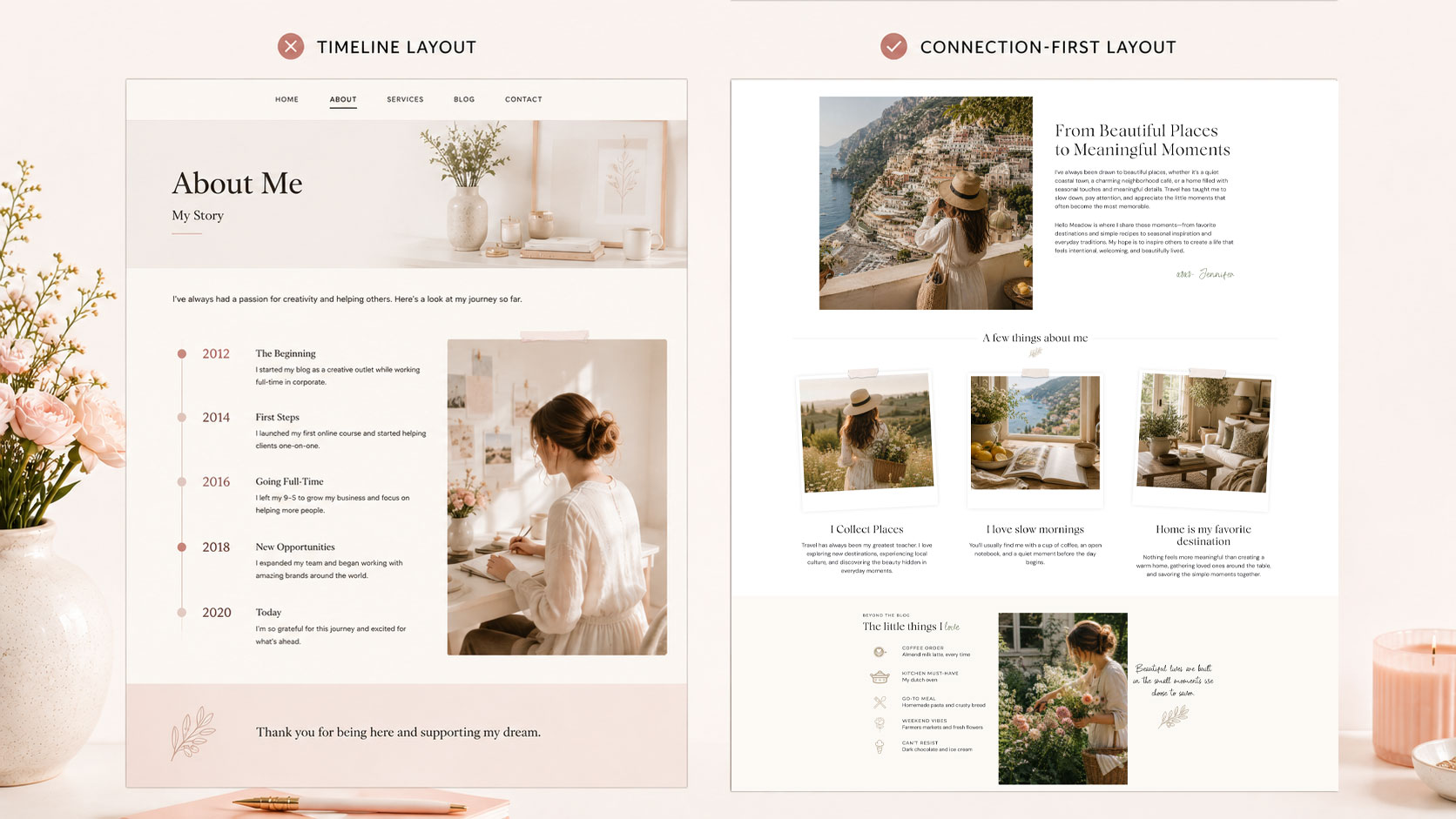
Many About pages begin with something like, “I started my business in…”
While your story matters, it’s usually not the first thing visitors need to know. Instead, begin by helping readers understand what you believe, who you help, or why your work matters.
Once that connection is established, readers are much more likely to keep reading because they already understand how your story relates to them. Rather than wondering why they’re reading your story, they begin to see themselves in it.
Think of your About page as an introduction to a conversation—not a history lesson.

Designer Tip:
Your opening shouldn’t begin with:
“Who am I?”
It should begin with:
“Why should my visitor care?”
03. Let Your Personality Show
Professional doesn’t have to mean formal.
Some of the best About pages include thoughtful details that help visitors feel like they’re getting to know a real person. Those moments create connection, build trust, and make your business more memorable.
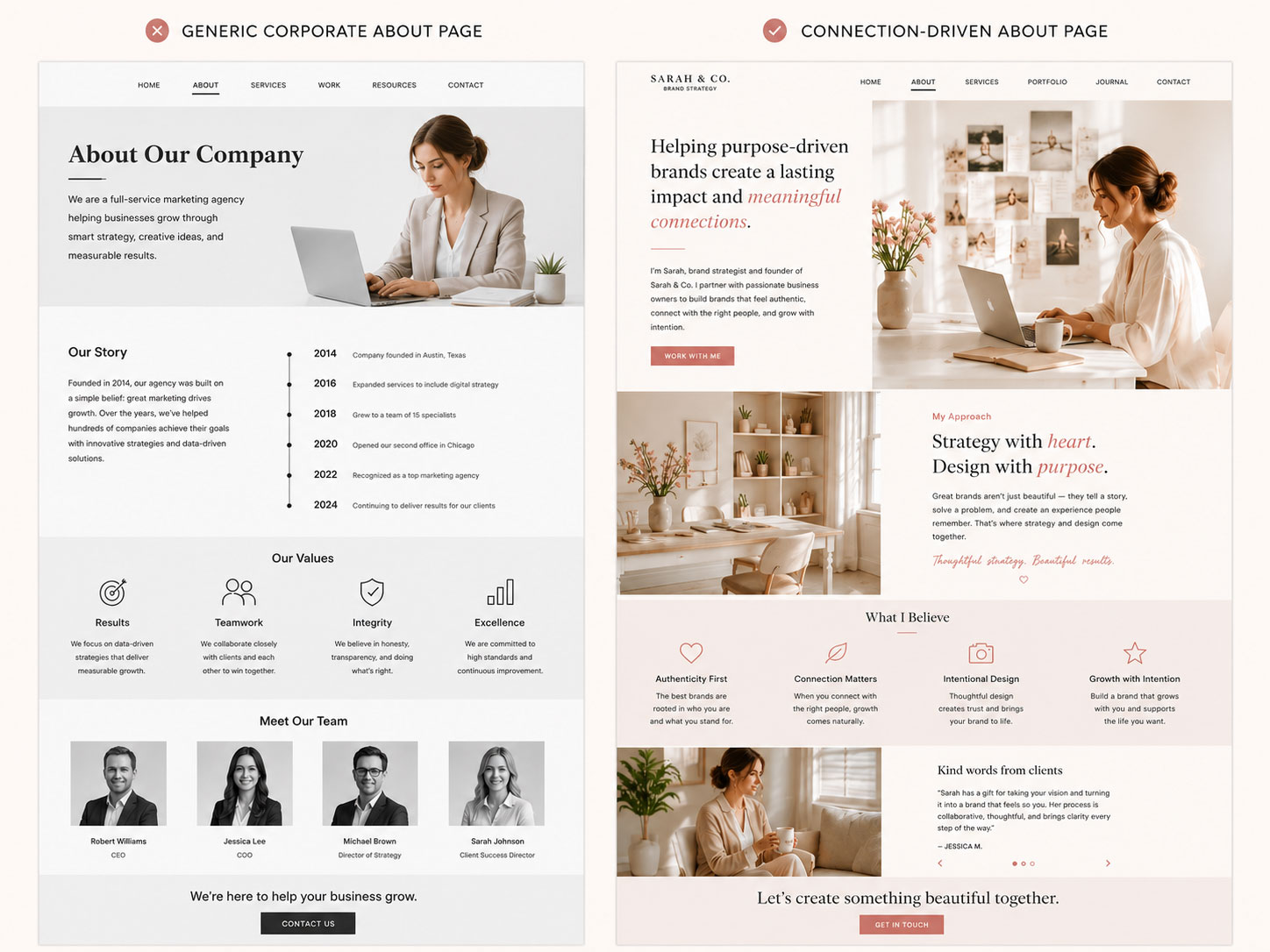
Your About page should reflect both your personality and the people you want to serve. A corporate consultant might build trust through polished photography, clear credentials, and a confident tone. A travel blogger or creative entrepreneur may rely more on storytelling, lifestyle imagery, and personal moments. Neither approach is better—they simply create trust in different ways.
The goal isn’t to copy someone else’s About page. It’s to create an experience that feels authentic to your brand while making your ideal visitor feel like they’ve found exactly who they’re looking for.
Once you’ve established the right tone, it’s the small details that make your page feel personal.
Some of the simplest details are often the most memorable:
These small moments create connection without taking attention away from your business.
Visitors may not remember every word they read, but they’ll remember how your About page made them feel—and that feeling often determines whether they continue exploring your website.
Designer Tip:
You don’t have to share everything to feel authentic. Choose a few meaningful details that reflect your personality and support your brand. A thoughtful glimpse behind the scenes is often more memorable than a lengthy personal biography.
04. Design Your Story for Easy Reading
Even the most interesting story becomes difficult to follow when it’s presented as one giant block of text. A well-designed About page guides readers naturally through your story, making it feel inviting instead of overwhelming.
Break your story into meaningful sections, mixing text with photography, generous spacing, and visual highlights that keep readers engaged. Pull quotes, testimonials, and featured moments can also help create natural pauses, giving visitors a chance to absorb your story before moving on.
When your content is thoughtfully organized, readers never have to wonder where to look next. Instead of feeling like they’re reading a long biography, they experience your story one meaningful section at a time.
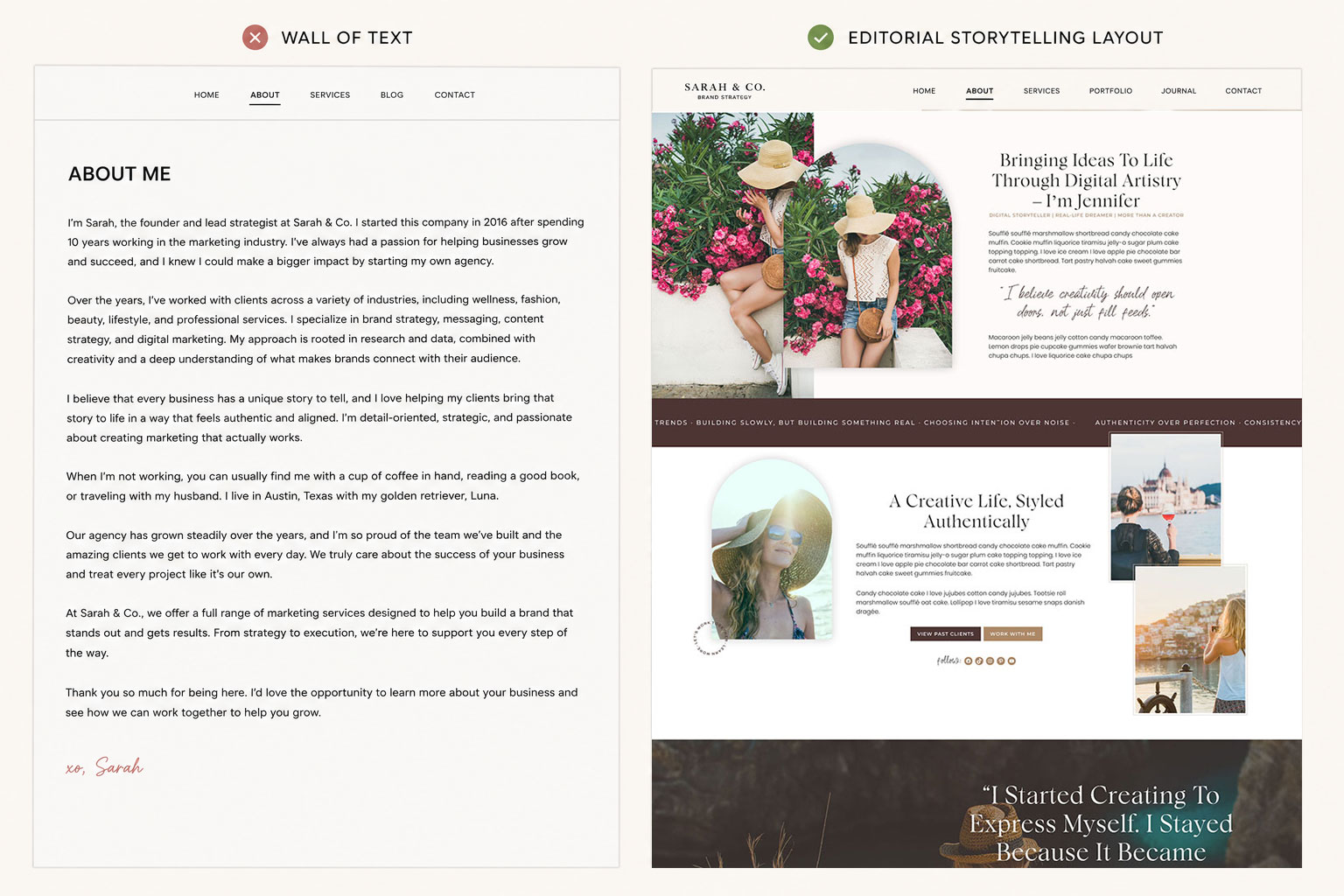
Designer Tip:
Don’t design your About page like an essay. Think of it as a visual story, where every section gives readers a reason to pause, connect, and keep scrolling.
05. Build Trust Throughout the Page
Trust shouldn’t appear only at the bottom of your About page. Instead, weave it naturally throughout the experience so visitors feel increasingly confident as they continue reading.
That might include testimonials, media features, awards or certifications, years of experience, client logos, or portfolio examples. Rather than grouping everything into one dedicated “trust section,” allow these elements to support your story where they feel the most relevant.
When trust is introduced gradually, it feels more authentic and less like you’re trying to prove yourself all at once. Small moments of reassurance throughout the page create a stronger impression than saving everything for the very end.
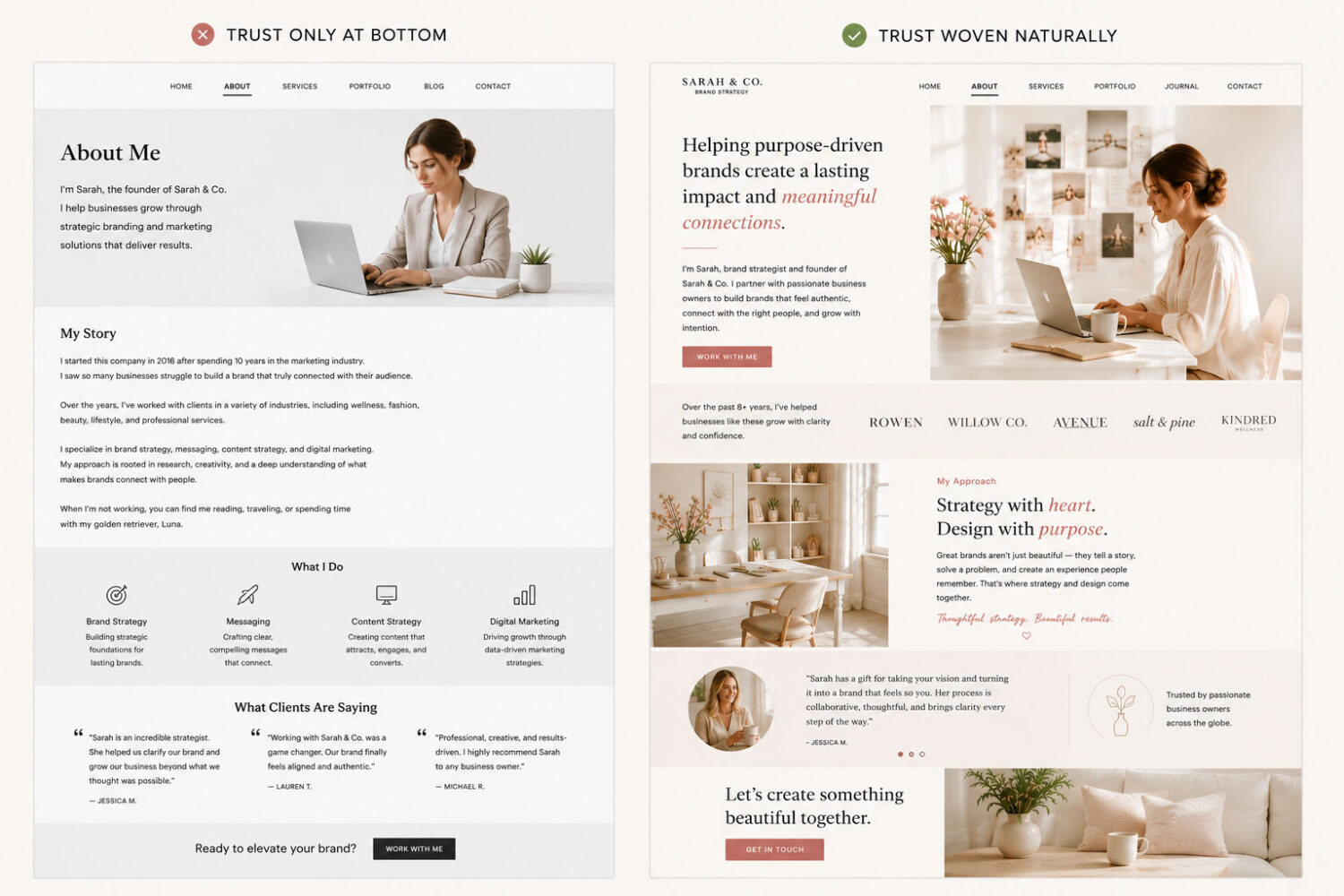
Designer Tip:
Trust works best when it supports your story—not interrupts it. Place testimonials, client results, or credibility markers where they naturally reinforce what visitors are already reading, rather than collecting them all in one place.
06. Write Like You’re Talking to One Person
One of the biggest reasons people struggle to write an About page is because they think it has to sound impressive. They spend so much time trying to find the perfect words that they forget they’re simply introducing themselves to another person.
Instead of writing for hundreds or thousands of visitors, imagine you’re sitting across the table from one potential client or reader. They’re curious about who you are, what you do, and whether you’re the right person to help them.
Instead of asking yourself, “How can I sound more professional?” ask yourself questions like:
Don’t worry about writing complete paragraphs yet. Simply write down your thoughts exactly as they come to mind—even if they’re messy.
For example, many people start with something like:
“I started my business in 2018 after leaving my corporate job.”
There’s nothing wrong with that sentence—it simply tells readers what happened. What visitors really want to understand is why that moment mattered, because that’s where your purpose begins to shine through.
A stronger version might sound like this:
“I started my business because I wanted to help small business owners create websites that finally felt like their brand instead of another template.”
The second version tells readers far more than when you started—it tells them why you started. That’s the kind of story people remember because it reveals your purpose, not just your timeline.
Once you’ve captured your ideas, organize them into the structure you’ve learned throughout this article. Add photographs, trust elements, and thoughtful design to create a page that feels both personal and professional.
Remember, visitors aren’t looking for perfect writing. They’re looking for someone they feel they can trust. Authenticity will always connect more deeply than perfectly polished words.
The best About pages don’t sound like résumés—they sound like conversations.
07. Guide Visitors to the Next Step
After someone finishes reading your About page, they shouldn’t have to wonder what to do next. If you’ve spent time building trust and creating a connection, don’t let the experience simply end there.
Instead, guide visitors toward a single, intentional next step. Depending on your business, that might mean inviting them to browse your services, explore your portfolio, read your latest articles, contact you, or join your newsletter. The goal isn’t to present every possible option—it’s to make continuing the relationship feel natural and effortless.
A thoughtful call to action gives your About page a sense of purpose. Rather than reaching a dead end, visitors leave knowing exactly where to go next and feeling encouraged to keep exploring your website.
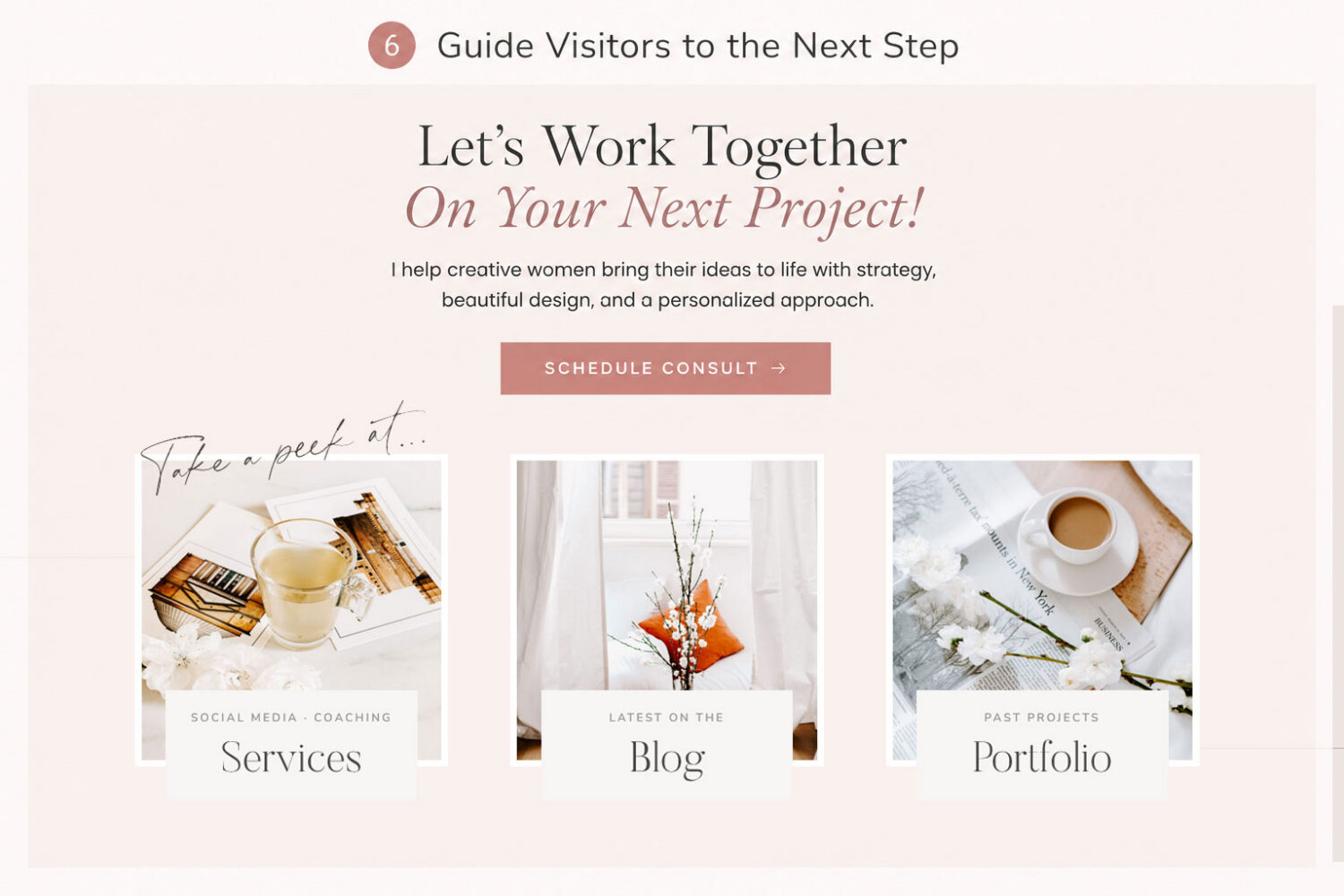
08. Bringing Everything Together
Your About page is one of the few places on your website where personality and purpose come together. When it’s thoughtfully designed, visitors don’t just learn what you do—they begin to understand who you are, what you believe, and why they should trust you.
Rather than telling your entire story, focus on creating an experience that feels welcoming, genuine, and easy to follow. Every section, photograph, and design decision should help visitors feel more connected to both you and your brand.
When readers leave your About page feeling understood and inspired, they’re far more likely to continue exploring everything else your website has to offer.
The best About pages don’t tell people who you are. They help people see why you’re the right person for them.
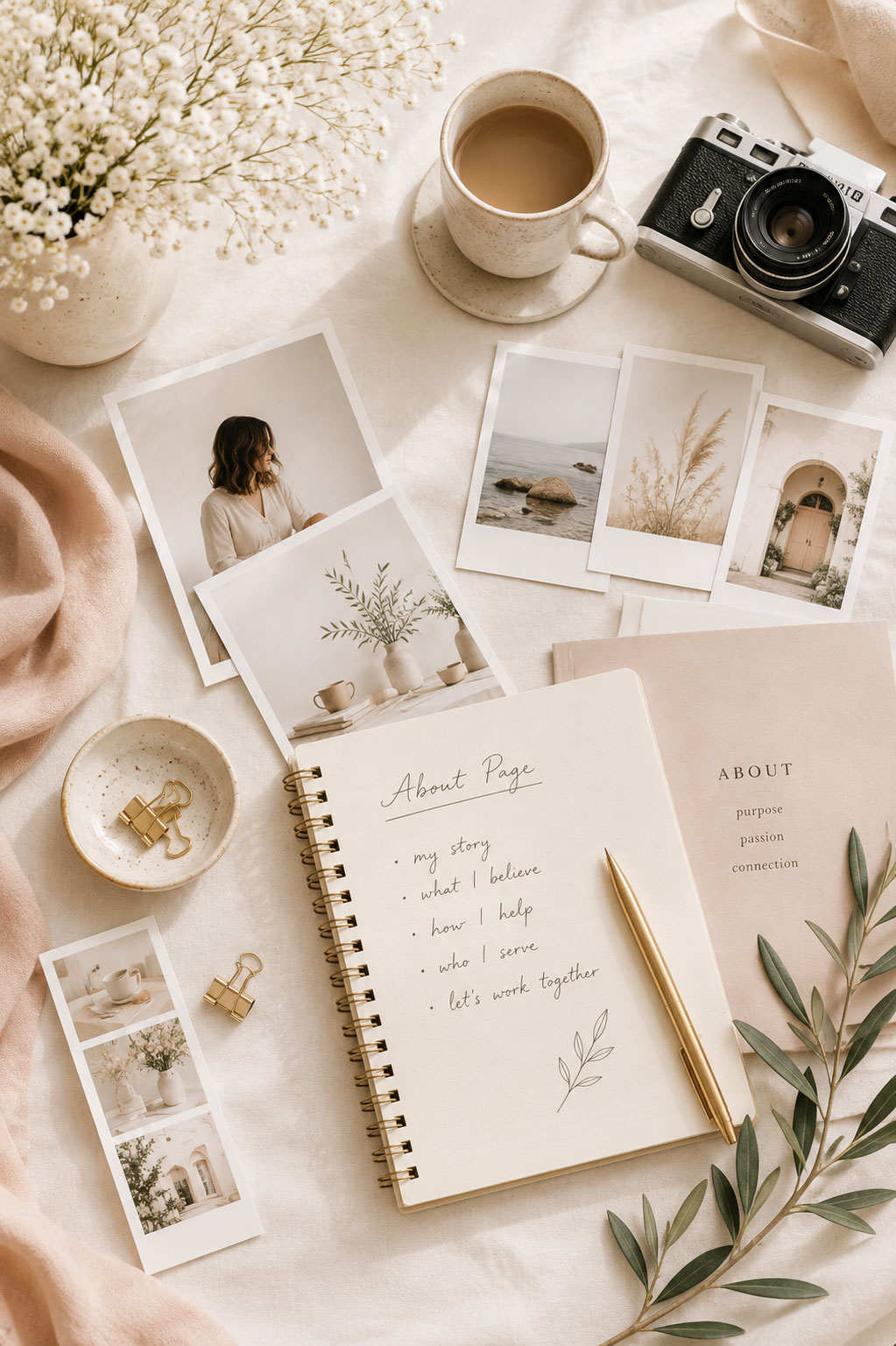
Build an About Page That Feels Personal and Professional
Every Hello You Designs theme includes thoughtfully designed About page layouts that help you share your story, build trust, and create meaningful connections.
Explore our collection of WordPress themes and create a website that feels polished, professional, and uniquely yours.
Some Common Design Questions
Still have questions? Here are a few quick answers to some of the most common questions about this topic.